
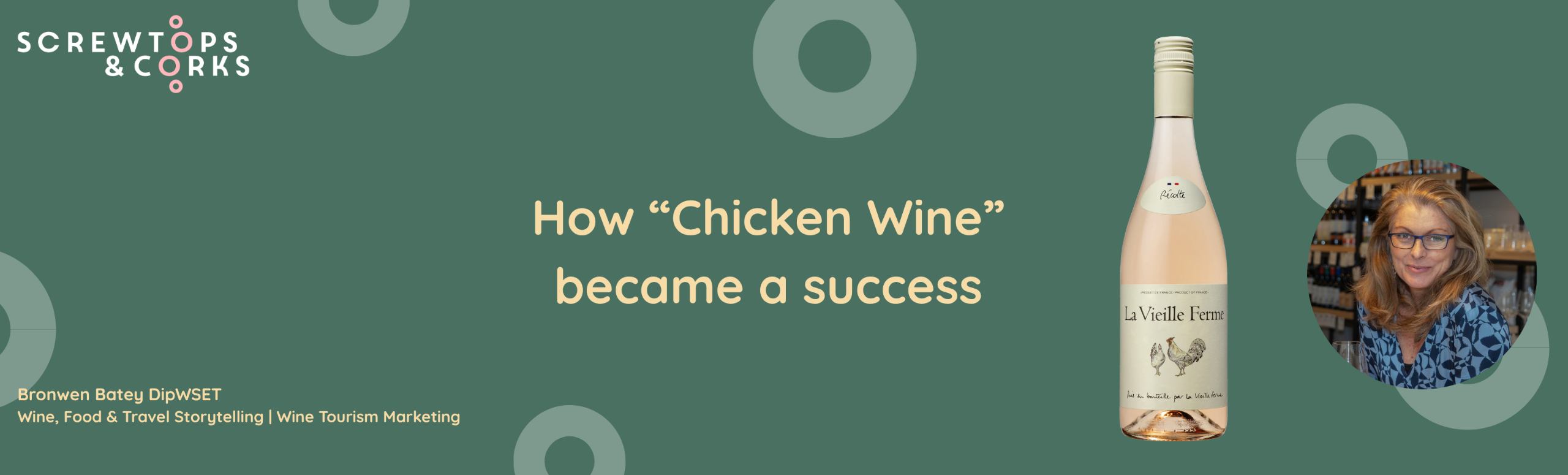
The “Chicken Wine”
Every so often, the wine world gives us a reminder that great branding doesn’t have to be complicated. It just has to connect; has to relate and deliver.
Enter La Vieille Ferme - affectionally known as the Chicken Wine.
Even if the wine is created by one of France’s most famous wine-producing families, the brand name may not be familiar to all, yet everyone has almost certainly seen the bottle and its label: The rooster. The hen. The simple farmhouse charm. It is instantly recognisable, easy to remember, and quietly iconic, without trying too hard.
In 2024, La Vieille Ferme rebranded as the ‘Chicken Wine’ and its rosé is now the best-selling in its category by value and volume in the UK.
So why did it work so well?
It was easy for people and the media to grab onto
The nickname “Chicken Wine” did a lot of the heavy lifting.
It is visual.
It is memorable.
It is easy to say, easy to recommend, and impossible to confuse with another brand.
Most importantly, the name “Chicken Wine” came from consumers, which in turn creates a real sense of connection to the brand.
And on crowded wine shelves, and an even more crowded media landscape, simplicity, curiosity, and fun cuts through. A clear visual cue can give journalists and consumers something tangible to latch onto immediately.
The label told a story before a word was written
La Vieille Ferme did not rely on flashy campaigns, traditional jargon, or complicated messaging. The label communicated everything you needed to know - approachability, affordability, warmth, and everyday enjoyment.
This is a powerful lesson for wine producers.
Your visual identity should make people feel something before they read a single word.
It made people smile and that matters
One of the reasons why I believe the media embraced the ‘chicken wine’ is because it’s simply joyful. There’s no jargon. It does not take itself too seriously. It feels friendly, familiar, and unpretentious.
Emotion is powerful in marketing, and both the media and the end consumer respond to that too. Stories that make people smile or feel included are far more shareable than those built purely on technical detail or flashy designs.
It’s not about status; it’s about making customers feel part of the story.
The product matched the promise
None of this would matter if the wine did not deliver.
La Vieille Ferme works because it is consistent, versatile, and genuinely good value. When a product lives up to expectations, it becomes a repeat purchase. That is where word of mouth really begins.
Word of mouth did the rest
Lifestyle outlets, food writers, and social media creators embraced the chicken wine organically, often with humour and affection. Consumers became storytellers, and the internet amplified it.
Viral moments cannot be forced. What can be controlled is how prepared you are when attention arrives.
Clear branding.
Strong visuals.
Consistent emotive messaging.
Easy-to-understand information.
A story that feels part of today’s narrative, for today’s customers.
The takeaway
The Chicken Wine is a reminder that the most effective brands are often the simplest ones. Clear, consistent, emotionally resonant, and easy to talk about.
For wine businesses, the question is not “how do I go viral?”
It is: “how easy is it for my target audience to understand, remember and share my brand?”
Because when you get that right, people, and the media, will do the talking for you.
My new Mini Masterclass Working Effectively with the Media is designed to provide small wine businesses the tools and knowledge to help them be seen and heard.